




_1769500650447.webp)
NAD+/53-84-9/NAD+ Bioactive Peptide/NAD+ Effect
- Product Description
PeptideName:NAD+/53-84-9/NAD+ Bioactive Peptide/NAD+ Effect
Catalog No:/
Sequence:/
CAS Number:53-84-9
Molecular Formula:C21H27N7O14P2
Molecular Weight:663.40
Category:NAD+,53-84-9,Peptide synthesis,Peptide raw material company
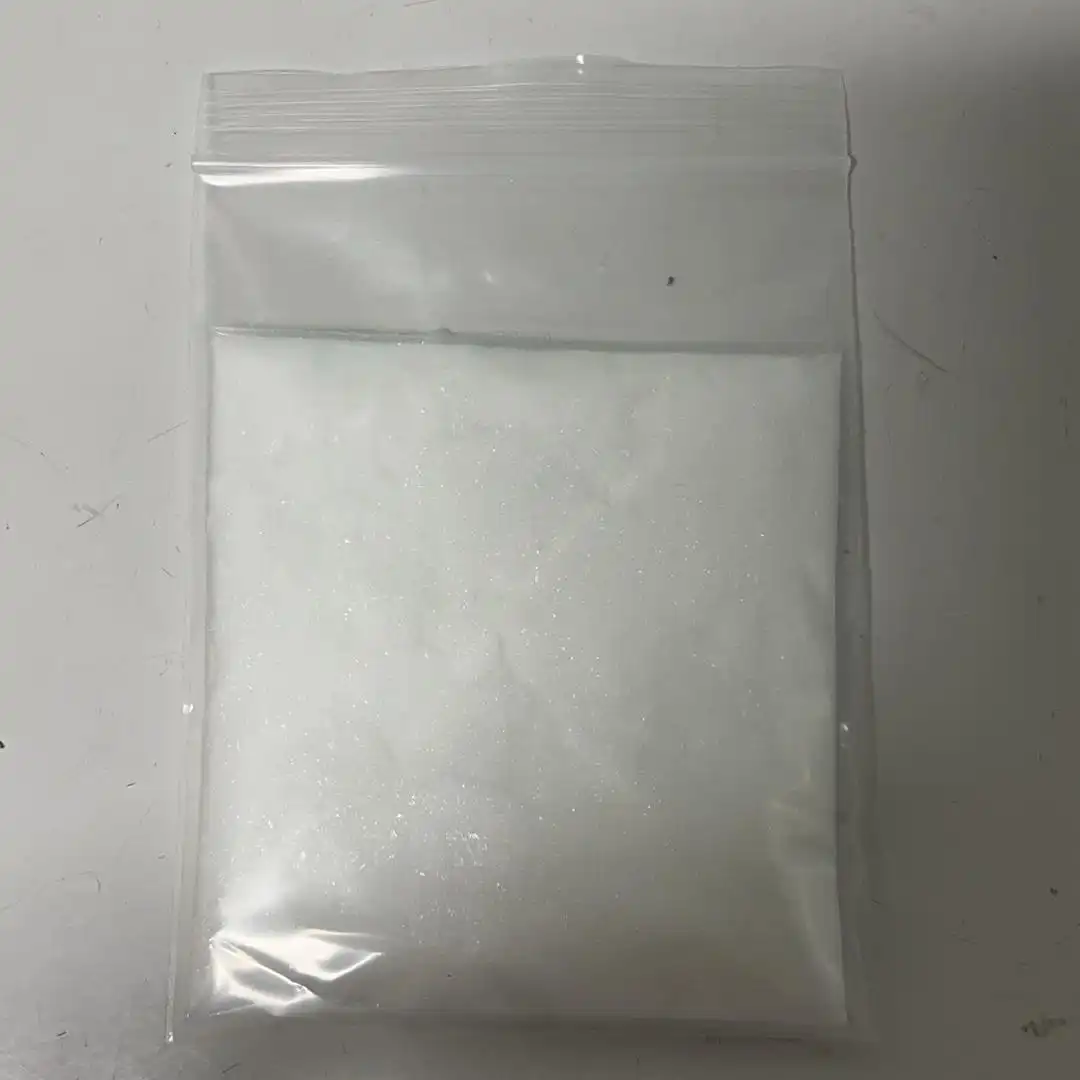
Description:NAD+, namely nicotinamide adenine dinucleotide (oxidized coenzyme I), has a CAS number of 53-84-9, a molecular formula of C21H27N7O14P2 and a molecular weight of 663.43. It is a core biological coenzyme widely present in all living cells, appearing as a white to off-white crystalline powder. It is highly soluble in water with its aqueous solution showing weak acidity, and has excellent stability under dry conditions with a purity of over 99%. It serves as a key raw material for life science research and bio-industry applications.
Specifications
Apperance: White to off-white powder
Purity(HPLC): ≥98.0%
Single Impurity: ≤2.0%
Acetate Content(HPLC): 5.0%~12.0%
Water Content (Karl Fischer): ≤10.0%
Peptide Content: ≥80.0%
Packing and Shipping: Low temperature, vacuum packing, accurate to mg as required.
FAQ:
I need a cyclic peptide, which contains a tryptophan, will it be oxidized?
The oxidation of tryptophan is a common phenomenon in peptide oxidation, and peptides are usually cyclized before purification. If the oxidation of tryptophan occurs, the retention time of the peptide on the HPLC column will change, and the oxidation can be removed by purification. Furthermore, oxidized peptides can also be detected by MS.
What problems should be paid attention to in the storage process?
The peptide you received was packaged in lyophilized powder. Peptides are hydrophilic, and absorption of water will reduce the stability of the peptide and reduce the peptide content. Please pay attention to the following: first, with desiccants, stored in a dry environment. Second, once received, please immediately put into the freezer -20℃ storage, in order to maintain maximum stability. Third, avoid the use of no automatic frost function of the freezer. Changes in humidity and temperature can affect the stability of peptides. Fourth, the external temperature during transportation does not affect the validity and quality of peptides.
How is my peptide transported? What test reports are provided?
All freeze-dried polypeptides are usually stored in special containers of 2 ml or 10ml with original analytical data and synthesis reports containing important information such as sequence, molecular weight, purity, weight, and number of the polypeptide.
If a NAD+ is 98% pure, what is 2%?
Two percent of the composition was truncated or deleted sequence fragments.
Is it necessary to put a gap between the peptide and the dye?
If you are going to attach a large molecule (such as a dye) to the peptide, it is best to put a space between the peptide and the ligand to minimize interference with the receptor by the folding of the peptide itself or by the folding of its conjugate. Others do not want intervals. For example, in the folding of proteins, it is possible to determine how far apart the folding structure of an amino acid is by attaching a fluorescent dye to a particular site.