




In the fields of anti-aging and cell biology research, Epithalon (CAS 307297-39-8), a synthetic tetrapeptide with the amino acid sequence Ala-Glu-Asp-Gly, has emerged as a research hotspot due to its unique mechanism of action. Derived from a mimetic structure of ipriflavone, an extract of the mammalian pineal gland, its core value lies in the molecular pathways regulating cellular senescence, with numerous preclinical studies providing solid evidence for its potential.
Its most fundamental mechanism of action centers on the regulation of the telomere-telomerase system. Telomeres, the "protective caps" at the ends of chromosomes, gradually shorten with each cell division and serve as a key biomarker of cellular senescence. Studies indexed in PubMed have confirmed that Epithalon can upregulate the expression of the human telomerase reverse transcriptase (hTERT) subunit, thereby activating telomerase activity. This process extends telomere length in normal human cells; notably, it can even enable fibroblasts to overcome their replicative limit, proliferating from passage 34 to passage 44. This regulation exhibits cell specificity: in cancer cells, Epithalon acts through the Alternative Lengthening of Telomeres (ALT) pathway, whereas in normal cells, ALT activity is only slightly elevated—providing a reference for the safety profile of its research.
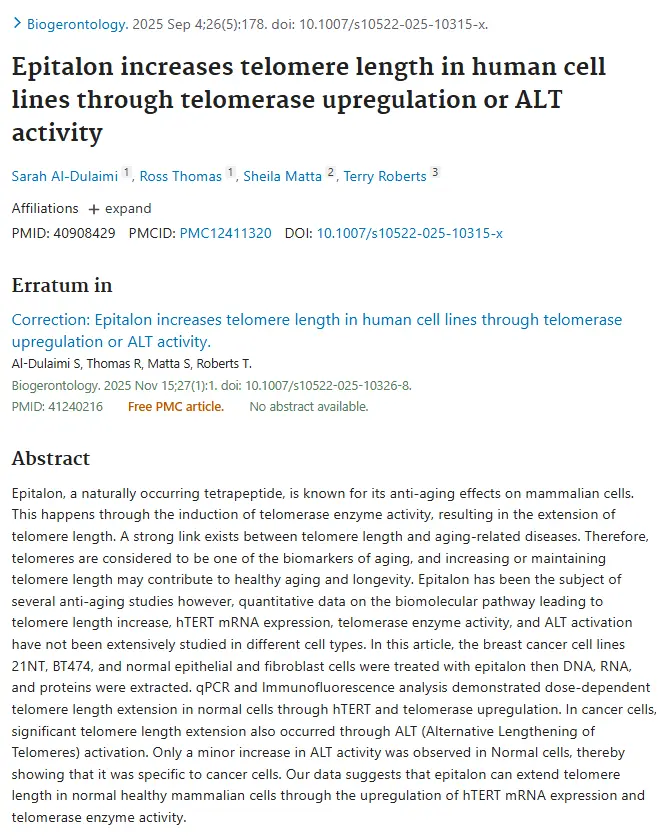
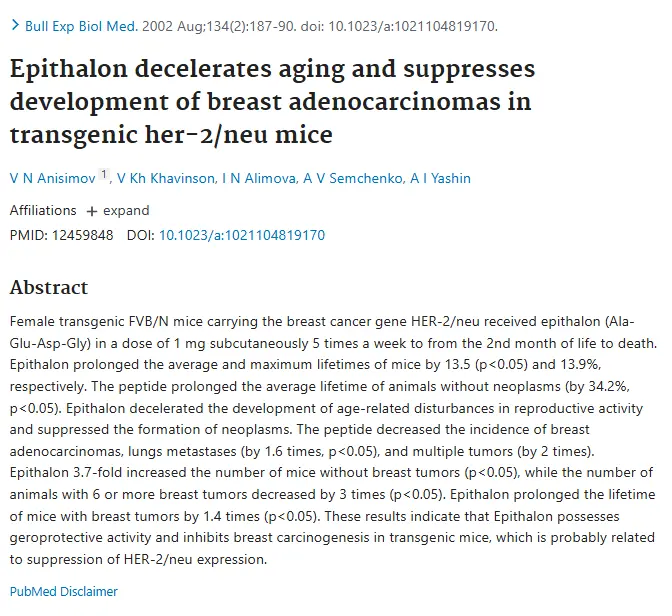
The improvement of lifespan and healthspan constitutes a critical research direction for Epithalon. Animal experimental data demonstrate its significant ability to extend the lifespan of model organisms: it increases the lifespan of Drosophila by 11%–16%. In transgenic mice carrying breast cancer genes, it prolongs the average lifespan by 13.5% and the maximum lifespan by 13.9%. Concurrently, it extends the tumor-free survival period by 34.2% and reduces the incidence of breast tumor metastasis by 1.6-fold. More notably, Epithalon does not merely extend lifespan but also enhances the quality of aging. For example, it restores the circadian rhythms of cortisol and melatonin in aged rhesus monkeys, protects retinal function, and delays the progression of retinitis pigmentosa.
Its anti-aging effects are also reflected in multidimensional physiological regulation. Studies have found that Epithalon can reduce free radical levels, modulate catalase activity to alleviate tissue damage, inhibit chromosomal aberrations, decrease DNA mutation rates, and enhance immune system stability and intestinal mucosal health. These effects are not mediated through traditional longevity pathways such as caloric intake or body weight regulation, suggesting the existence of a unique molecular regulatory network specific to Epithalon. To date, the complete mechanism of this network remains under intensive investigation.
As a peptide molecule with combined potential in telomerase activation, antioxidation, and tumor suppression, Epithalon provides a novel target for the research of aging-related diseases. It is crucial to emphasize that most current research is limited to cellular and animal models, and human clinical data still require further accumulation. Nevertheless, existing findings fully indicate that this small-molecule peptide is playing an increasingly important role in unlocking the code to healthy aging, warranting more interdisciplinary exploration in the future.