




In the field of molecular biology research, short peptide bioregulators are gradually emerging as a focal point in studies on aging mechanisms and immune function due to their precise cellular regulatory effects. As a representative molecule among them, Livagen (CAS: 195875-61-1) has opened a new window for researchers to understand cellular senescence and functional repair with its unique chromatin-regulating ability.
As a tetrapeptide bioregulator, Livagen has an amino acid sequence of Lysine-Glutamic Acid-Aspartic Acid-Alanine (Lys-Glu-Asp-Ala) and a molecular weight of only 461.5 g/mol. This streamlined molecular structure endows it with efficient cell penetration and functional activity. Its core mechanism of action lies in the regulation of chromatin state—studies have confirmed that Livagen can induce chromatin decondensation, relieve gene silencing caused by chromatin condensation during aging, and thereby activate the expression of key functional genes in cells.
The immune system is one of the most thoroughly researched areas for Livagen. A study published by scholars such as Khavinson in the Bulletin of Experimental Biology and Medicine in 2004 indicated that Livagen can significantly activate ribosomal genes in lymphocytes, improve the expression pattern of immune genes in aged animals, and reverse age-related decline in immune function. This study used lymphocytes from healthy individuals aged 75 to 88 as research subjects, verified the core effect of Livagen on chromatin decondensation and gene activation, and its conclusions hold important reference value. Subsequent experiments by Trofimova et al. (2021) further confirmed that this peptide can downregulate the expression of proinflammatory factors and enhance cellular repair capacity by regulating the levels of histone acetylation and DNA methylation.
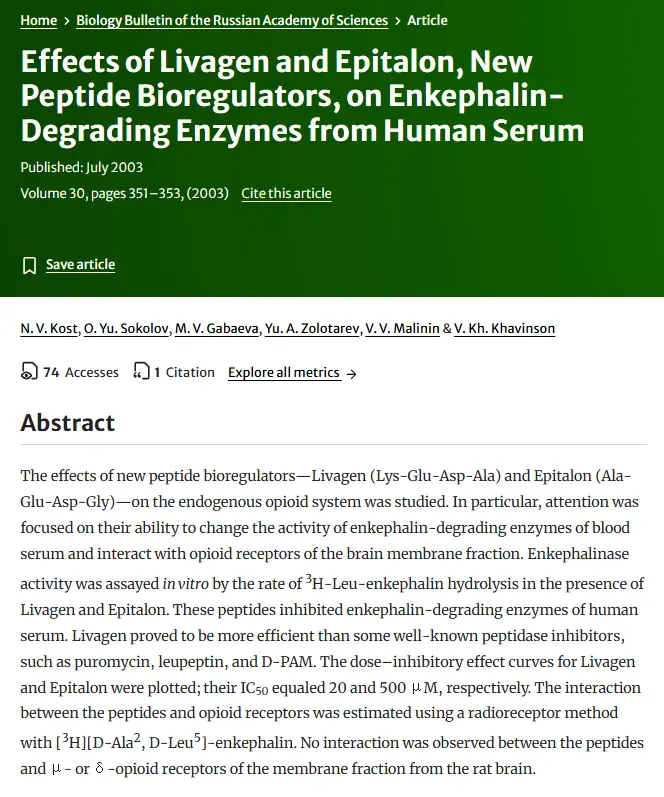
Beyond immune regulation, Livagen's scope of action also covers the gastrointestinal tract, liver and central nervous system. Studies have found that it can target and activate functional genes silenced by aging in these tissues, exhibiting potential regulatory value in models of myocardial hypertrophy, gastrointestinal dysfunction and other conditions. Its unique advantage is that, compared with traditional regulators, Livagen is resistant to intestinal peptidases, and its IC50 value for inhibiting dipeptidase activity is only 20 μM, representing a significantly higher action efficiency.
Currently, research on Livagen is still advancing in depth. Its unique role in fields such as chromatin remodeling and epigenetic regulation provides an important tool for mechanistic studies on aging-related diseases. As a biological reagent for scientific research, its excellent safety and targeting properties are attracting more researchers to explore its potential value.
Keyword:Livagen,195875-61-1,Livagen Hepatoprotective Peptide,livagen peptide benefits