




Keyword:Solnatide,259206-53-6,Solnatide Therapeutic Peptide
A synthetic cyclic peptide targeting alveolar fluid clearance, breaking through the dilemma of critical pulmonary disease diagnosis and treatment
In the field of critical pulmonary disease diagnosis and treatment, diseases such as acute respiratory distress syndrome (ARDS) and primary graft dysfunction after lung transplantation (PGD) have always been clinical challenges due to impaired alveolar fluid clearance and lung barrier damage. The emergence of Solnatide (CAS No.: 259206-53-6), a synthetic cyclic peptide, has opened up new avenues for the treatment research of these diseases. Its unique mechanism of action and solid scientific data are gradually gaining recognition in the academic community.
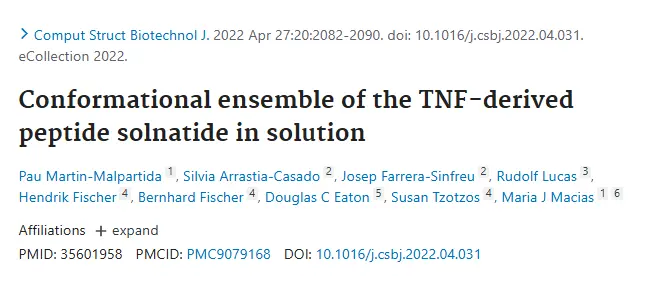
Solnatide's core characteristics: Derived from a TNF fragment, possessing both stability and specificity
Solnatide is a synthetic cyclic peptide derived from the lectin-like domain of tumor necrosis factor-α (TNF-α). Some studies show it to be a cyclic polypeptide composed of 17 amino acids, while others mention it contains 21 amino acids. Its core advantage lies in its excellent biological stability. Unlike TNF-α, Solnatide abandons its inflammatory-inducing activity, retaining and enhancing only the biological functions related to alveolar fluid clearance. This is a key characteristic that distinguishes it from traditional inflammation-related peptides.
Mechanism of Action: Multidimensional Targeted Protection of Lung Tissue Function
Its mechanism of action is clear and specific: primarily by activating alveolar epithelial sodium channels (ENaC), promoting the reabsorption of sodium and fluid in alveolar epithelial cells, thereby accelerating alveolar fluid clearance (MedKoo Biosciences). Simultaneously, it can upregulate the expression of the tight junction protein occludin, enhancing the stability of the alveolar-capillary barrier, reducing vascular leakage, and inhibiting pro-inflammatory pathways and scavenging reactive oxygen species, thus protecting lung tissue function in multiple dimensions. In vitro experiments have confirmed that it can enhance ENaC-mediated sodium uptake in human alveolar epithelial cells within the nanomolar concentration range, exhibiting highly efficient biological activity.
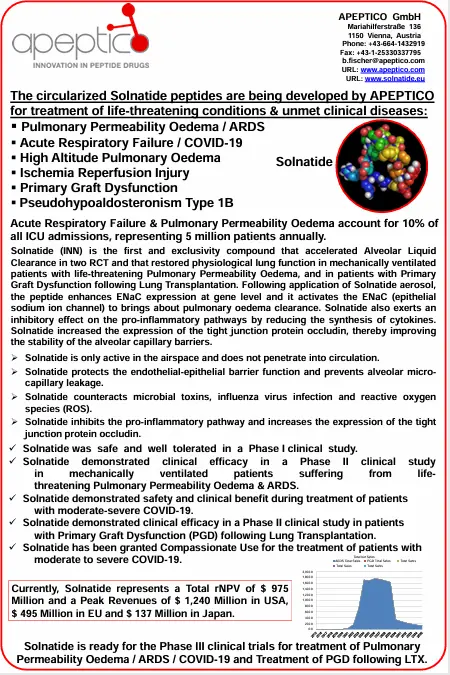
Scientific and Clinical Evidence: Laying a Solid Foundation for Clinical Application Potential
Clinical research and preclinical data support its potential: Phase II clinical trials showed that Solnatide aerosol inhalation effectively restored lung function in mechanically ventilated patients with pulmonary permeability edema and post-lung transplant PGD patients, and demonstrated clinical benefit in the treatment of moderate to severe COVID-19 patients, and has been granted compassionate use designation. A PubMed study (35601958) used nuclear magnetic resonance (NMR) technology to analyze its solution conformation and proposed a binding model with the C-terminal domain of the ENaCα subunit, providing a theoretical basis for subsequent derivative design.
Research Progress and Clinical Outlook: Potential Novel Drug Candidate for Severe Pulmonary Disease
As the only compound currently capable of accelerating alveolar fluid clearance in clinical trials, research on Solnatide (259206-53-6) is still progressing. It has entered Phase II clinical trials and is about to move to Phase III trials, potentially becoming a novel drug candidate for the treatment of severe pulmonary disease. Its development not only demonstrates the advantages of peptide drugs in "precise targeting, low toxicity and high efficiency", but also provides a new solution for unmet clinical needs, which deserves continued attention from the scientific research and clinical fields.