




In the field of immunobiology research,Thymosin α1 (Tα1 for short, CAS No.: 62304-98-7) has always been a core molecule of great interest. This endogenous peptide composed of 28 amino acids was first isolated and identified from thymic tissue. Relying on its precise immunomodulatory activity, it has become an important bridge connecting basic scientific research and clinical application.
The core value of Tα1 lies in its bidirectional regulatory effect on innate and adaptive immunity. Studies have confirmed that it can activate the TLR2/9 receptors on the surface of antigen-presenting cells, promote the maturation of dendritic cells, and then enhance the proliferation and differentiation of T cells, thus achieving the precise regulation of immune responses. This unique mechanism of action endows it with enormous potential in the fields of immunodeficiency, infectious diseases and tumor therapy.
Clinical research data provide strong evidence for its value. A multicenter randomized controlled trial involving 1,106 patients with sepsis showed that Tα1 treatment brought significant survival benefits in the subgroups of elderly patients (≥60 years old) and diabetic patients without serious adverse reactions, confirming its clinical safety and targeting. In the field of viral diseases, its synthetic preparation has been approved for the treatment of hepatitis B and hepatitis C in 35 countries, improving patients' prognosis by enhancing cell-mediated immunity.
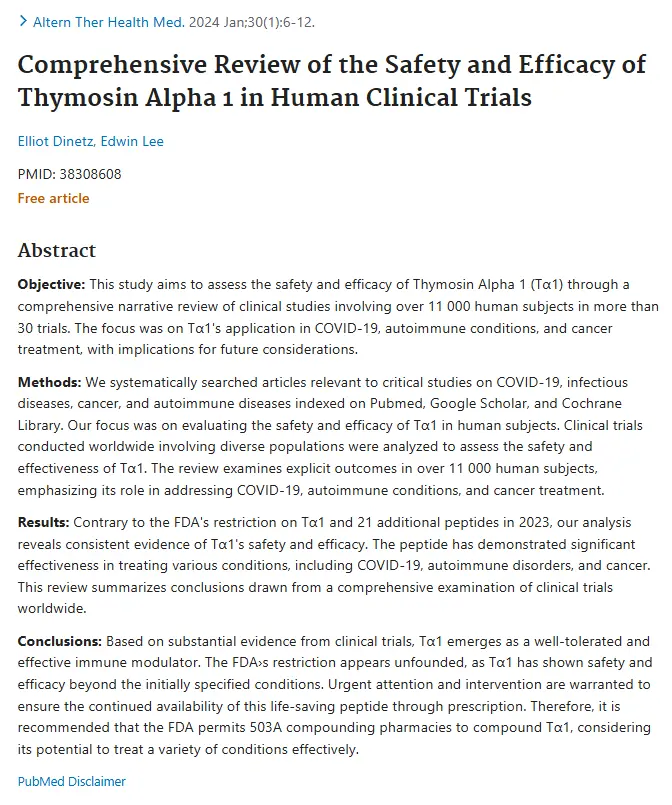
At the scientific research level, the application scenarios of Tα1 are continuously expanding. A review study covering more than 11,000 subjects on PubMed pointed out that it can repair the overactivated lymphoid immune damage in patients with severe COVID-19, providing a new direction for the immunological intervention of infectious diseases. Meanwhile, it also shows advantages in adjuvant tumor therapy, which can alleviate the immunosuppressive side effects of radiotherapy and chemotherapy and enhance patients' anti-tumor immune response capacity.
As a highly conserved peptide molecule, the amino acid sequence of Tα1 remains highly homologous from Escherichia coli to mammals, which lays a foundation for its cross-species research and translational application. From the analysis of basic immune pathways to clinical precision therapy, the research course of Tα1 witnesses the hardships and breakthroughs of peptide biological modulators moving from the laboratory to the clinic. In the future, with the in-depth study of its mechanism, its application prospects in the treatment of immune-related diseases will be broader.
Keyword:Thymosin α1,62304-98-7,thymosin α1 peptide,Thymosin α1 Immunomodulatory Peptide