




Keyword:Cilengitide,188968-51-6,Cilengitide Peptide
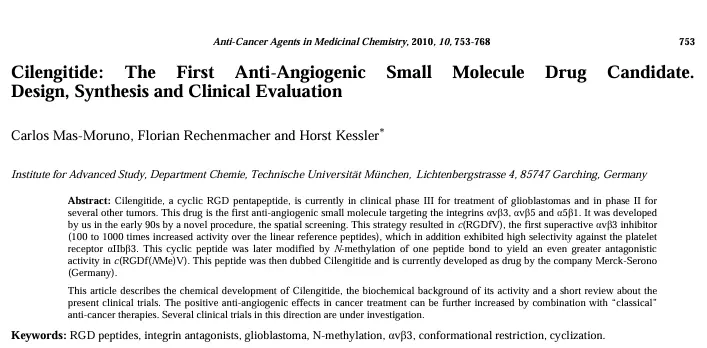
Cilengitide (EMD 121974) is a cyclic pentapeptide and a potent, selective inhibitor of integrin αvβ3 and αvβ5 receptors, initially developed as an anti-cancer agent but now explored across multiple therapeutic areas. As a cyclic arginine-glycine-aspartic acid (RGD)-containing peptidomimetic, it disrupts cell-matrix interactions, angiogenesis, and tumor progression by blocking integrin-mediated signaling, making it a versatile molecule in both clinical and preclinical research.
Mechanism of Action: How Cilengitide Works at the Molecular Level
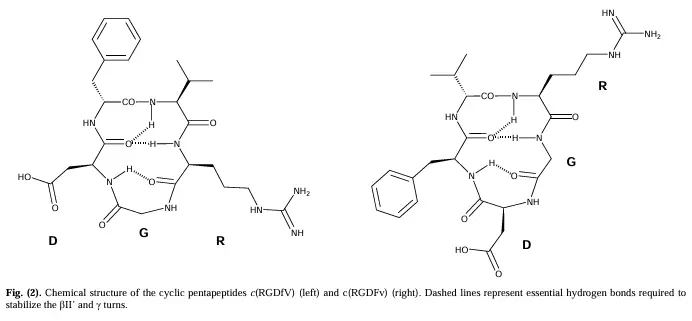
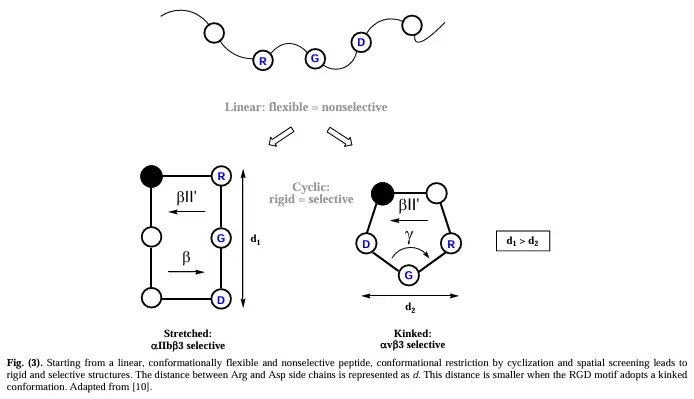
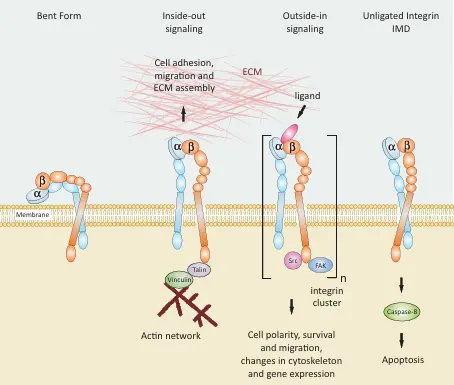
Cilengitide’s core function stems from its high-affinity binding to integrin αvβ3(IC50=4 nM) andαvβ5(IC50=79nM), transmembrane receptors that mediate cell adhesion, migration, and signal transduction. Integrins are critical for angiogenesis (new blood vessel formation), tumor invasion, and cell survival—processes essential for cancer growth and metastasis. By competitively blocking the RGD binding site on these integrins, cilengitide inhibits downstream signaling pathways, including FAK/Src/AKT and MAPK/ERK, which drive cell proliferation, survival, and matrix degradation. This disruption leads to three key biological effects: suppressed angiogenesis (starving tumors of nutrients), induced apoptosis (programmed cell death) in endothelial and tumor cells, and reduced tumor cell migration and invasion. Unlike broad-spectrum anti-angiogenics, cilengitide targets integrins specifically overexpressed in tumor vasculature and malignant cells, minimizing off-target effects in preclinical models. Its cyclic structure enhances stability and receptor selectivity, distinguishing it from linear RGD peptides and establishing it as a benchmark integrin antagonist in drug development.
Primary Clinical Use: Glioblastoma and Central Nervous System (CNS) Cancers
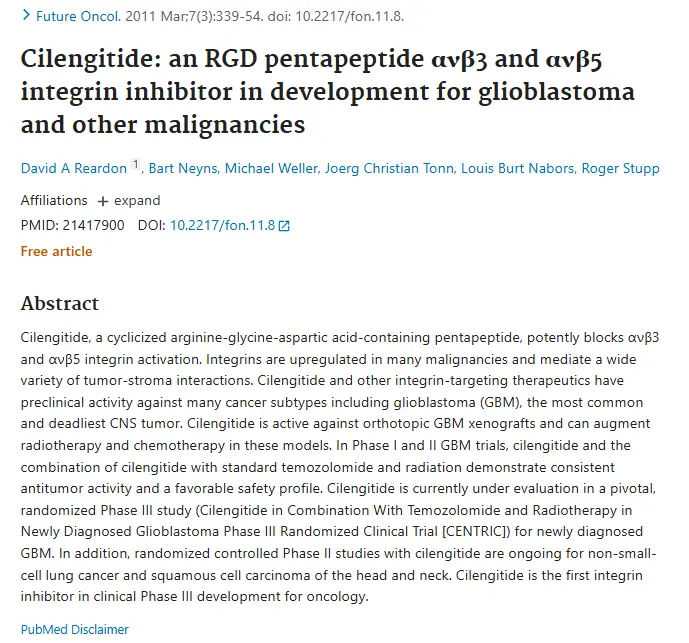
Cilengitide’s most extensively studied application is in glioblastoma multiforme (GBM), the most common and aggressive primary brain tumor in adults, with a 5-year survival rate of less than 10%. GBM relies heavily on integrin αvβ3/αvβ5 for angiogenesis, invasion into healthy brain tissue, and resistance to radiation and chemotherapy—making these receptors ideal therapeutic targets. Early Phase I/II trials showed promising results: cilengitide combined with standard radiotherapy plus temozolomide (the first-line GBM treatment) improved progression-free survival (PFS) and demonstrated favorable safety, with mild, manageable toxicities (e.g., fatigue, headache, nausea). It also crossed the blood-brain barrier effectively, a critical advantage for CNS tumors.
The landmark Phase III CENTRIC trial (EORTC 26071-22072) enrolled 545 patients with newly diagnosed MGMT-methylated GBM (a subtype linked to better treatment response), comparing radiotherapy + temozolomide with or without cilengitide (2000 mg IV twice weekly). Unfortunately, results were neutral: median overall survival (OS) was 26.3 months in both groups, failing to show a survival benefit.
Expanded Oncology Applications: Other Solid Tumors
Beyond glioblastoma, cilengitide was evaluated in multiple solid tumors in Phase I/II trials, leveraging its anti-angiogenic and anti-metastatic properties. In melanoma, preclinical studies demonstrated potent inhibition of tumor growth and metastasis by blocking integrin-mediated cell migration and angiogenesis. For head and neck squamous cell carcinoma (HNSCC) and non-small cell lung cancer (NSCLC), cilengitide combined with chemotherapy or radiation showed promising anti-tumor activity and tolerability, with evidence of reduced tumor vascularity and enhanced treatment sensitivity. It also showed activity in prostate, breast, and pancreatic cancers in preclinical models, targeting integrin-overexpressing tumor cells and their microenvironments.
Emerging Non-Oncology Uses: Tissue Repair, Osteoarthritis, and Fibrosis
In recent years, cilengitide’s research has expanded beyond cancer to regenerative medicine and chronic inflammatory diseases, driven by its ability to regulate tissue remodeling and cell differentiation. A 2026 Science Advances study from Sichuan University identified a novel role in osteoarthritis (OA) treatment: cilengitide inhibits integrin αvβ5 signaling, switches TGF-β pathway activity (from Smad2/3 to Smad1/5/9), and promotes COL5A1+ fibroblast differentiation into functional chondrocytes. In preclinical OA models, it reduced cartilage degradation, improved extracellular matrix synthesis, and restored joint mechanical function—offering a potential disease-modifying therapy for OA, a condition with limited treatment options.
Preclinical Research Tools and Drug Development
Cilengitide is a cornerstone reagent in integrin biology and cancer research, widely used in vitro and in vivo to study αvβ3/αvβ5 function. It validates integrin signaling pathways, screens for novel integrin inhibitors, and evaluates anti-angiogenic/anti-metastatic drug candidates. Pharmaceutical and biotech companies use it as a benchmark for developing next-generation integrin antagonists—including modified derivatives with improved stability, bioavailability, and efficacy against treatment-resistant cancers. For example, cilengitide analogs R-1 and R-7 show enhanced inhibition of MAPK/Akt signaling in temozolomide-resistant GBM cells, overcoming drug resistance in preclinical models.
Safety and Clinical Considerations
Across all trials, cilengitide exhibited a favorable safety profile, with no dose-limiting toxicities or severe adverse events (SAEs) reported at therapeutic doses. Common side effects were mild to moderate: fatigue, headache, gastrointestinal disturbances (nausea, diarrhea), and transient thrombocytopenia—all reversible upon treatment cessation. Unlike chemotherapy, it did not cause myelosuppression or neurotoxicity, making it suitable for long-term or combination regimens. However, its short half-life (≈2 hours) required frequent IV administration, limiting clinical convenience; oral formulations are in preclinical development to address this.
Conclusion
Cilengitide is a multifunctional integrin inhibitor with a rich research history, from a promising glioblastoma therapy to a versatile tool in oncology, regenerative medicine, and drug discovery. While its Phase III GBM trials did not meet survival endpoints, it remains critical for understanding integrin biology and developing combination therapies—especially with immunotherapies to reverse resistance. Its emerging roles in osteoarthritis, tissue repair, and fibrosis open new avenues for clinical application, proving that even discontinued oncology drugs can yield transformative insights across medicine. As research into integrin-targeted therapies advances, cilengitide’s legacy endures as a foundational molecule that redefined our approach to targeting tumor vasculature and tissue remodeling.