




Keyword:Teduglutide,197922-42-2,Teduglutide Peptide
Teduglutide is a groundbreaking injectable prescription medication and a synthetic analog of human glucagon-like peptide-2 (GLP-2), specifically engineered to address the severe nutritional challenges associated with Short Bowel Syndrome (SBS). As the first and only targeted therapy approved globally for SBS patients dependent on parenteral nutrition (PN), it has revolutionized the management of this rare, life-altering condition by directly enhancing intestinal function. Unlike conventional treatments that merely manage symptoms, teduglutide works at the cellular level to repair and regenerate the intestinal mucosa, offering patients a tangible path toward reduced intravenous support and improved quality of life.
Mechanism of Action: How Teduglutide Restores Intestinal Health
The therapeutic efficacy of teduglutide stems from its precise interaction with the body's intestinal regulatory systems. As a long-acting GLP-2 receptor agonist, it binds specifically to GLP-2 receptors located on the surface of intestinal epithelial cells and subepithelial myofibroblasts. This binding triggers a cascade of biological responses, including the release of insulin-like growth factor-1 (IGF-1), nitric oxide, and keratinocyte growth factor—key mediators of intestinal growth and repair.
By activating these pathways, teduglutide produces two critical physiological effects: first, it stimulates the proliferation of intestinal crypt cells and increases the height of intestinal villi, effectively expanding the surface area available for nutrient and fluid absorption. Second, it enhances intestinal barrier function and reduces intestinal permeability, while also slowing gastrointestinal transit time, allowing more time for nutrients to be absorbed. This dual action directly counteracts the core deficit in SBS—insufficient absorptive capacity—making it a disease-modifying agent rather than a symptomatic treatment. Its pharmacokinetic profile, with a half-life of approximately 2 hours and 100% subcutaneous bioavailability, supports once-daily dosing, ensuring sustained therapeutic effects throughout the day.
Primary Indication: Treating Short Bowel Syndrome (SBS) with Parenteral Nutrition Dependence
The only FDA, EMA, and NMPA-approved primary use of teduglutide is for the treatment of Short Bowel Syndrome (SBS) in patients who are dependent on parenteral support. SBS is a rare, chronic intestinal failure disorder that occurs when a significant portion of the small intestine is surgically removed (due to conditions like Crohn's disease, mesenteric ischemia, necrotizing enterocolitis, or trauma) or is congenitally absent. The remaining bowel is unable to absorb enough water, electrolytes, and nutrients to sustain life, forcing patients to rely on lifelong intravenous parenteral nutrition (PN) or intravenous fluids for survival.
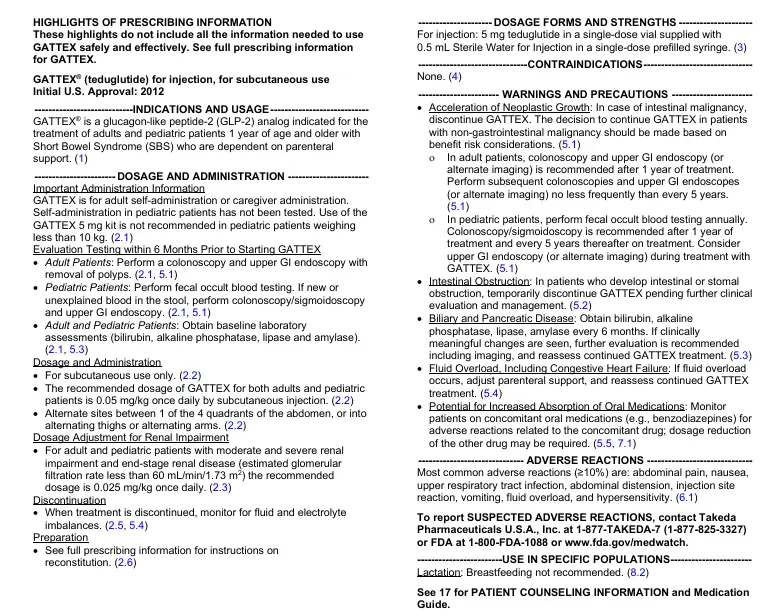
Teduglutide is indicated for adult patients and pediatric patients aged 1 year and older (and in some regions, infants as young as 4 months corrected gestational age) with stable SBS who have completed the post-surgical intestinal adaptation phase (typically 1–2 years after surgery) but remain PN-dependent. It is not intended for use in acutely ill post-operative patients or those with unstable SBS, nor is it a replacement for immediate post-surgical supportive care. Clinical guidelines, including those from the American Gastroenterological Association (AGA), recommend teduglutide as a second-line therapy for SBS patients who have not achieved adequate nutritional autonomy with optimized diet, anti-diarrheal, and anti-secretory medications.
Clinical Efficacy: Reducing Parenteral Nutrition Dependence
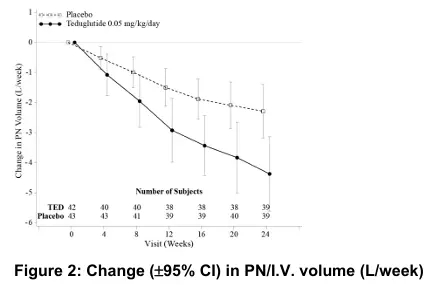
The transformative impact of teduglutide on SBS management is well-documented in multiple Phase III clinical trials and real-world evidence studies. In the pivotal 24-week, placebo-controlled STEPS trial (NCT00081457), 86 adult SBS patients receiving 0.05 mg/kg/day teduglutide achieved a 63% response rate (defined as a ≥20% reduction in weekly parenteral support volume), compared to just 30% in the placebo group. On average, teduglutide-treated patients reduced their parenteral nutrition needs by 4.4 liters per week, nearly double the 2.3 liters reduction seen in the placebo group.
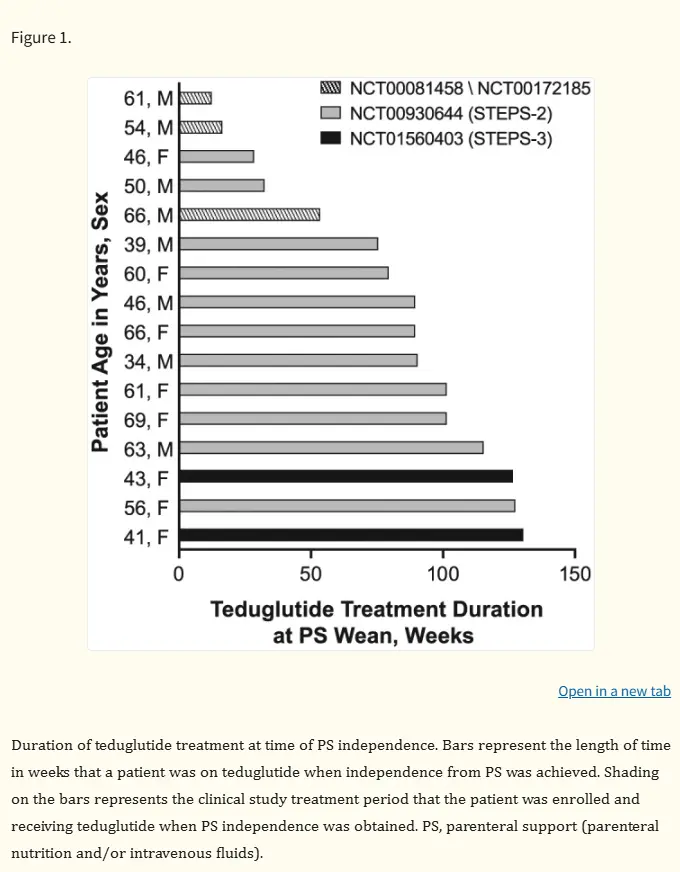
Long-term extension studies (STEPS-2) further validated these benefits, showing that 77% of patients achieved a ≥20% reduction in PN support at 12 months, and 82% at 24 months. Remarkably, 21% of patients were able to completely wean off parenteral nutrition after 24 months of continuous treatment—a milestone previously rarely attainable with conventional care. Pediatric trials (NCT03571516, NCT02980666) confirmed similar efficacy in children aged 1 year and older, with 60–70% of young patients achieving significant reductions in PN dependence after 24 weeks of treatment, and efficacy improving with longer-term use.
Off-Label and Investigational Uses
While SBS remains the only approved indication, researchers are actively exploring teduglutide's potential in other gastrointestinal and nutritional disorders, leveraging its potent intestinotrophic properties. Off-label applications include the treatment of other forms of intestinal failure, such as chronic intestinal pseudo-obstruction, radiation enteritis, and severe inflammatory bowel disease (IBD) with extensive intestinal damage, where impaired absorption drives PN dependence. It is also being studied in conditions like short bowel syndrome with intestinal failure (SBS-IF) in premature infants (off-label in most regions) and chronic diarrhea of various etiologies due to its ability to enhance fluid and electrolyte absorption.
In preclinical and early-phase clinical studies, teduglutide is being investigated for intestinal graft-versus-host disease (GVHD) following hematopoietic stem cell transplantation, where it may protect and repair the intestinal mucosa damaged by alloimmune responses. Additionally, its potential to improve intestinal barrier function has sparked interest in metabolic disorders like type 2 diabetes and obesity, though these applications are still in the experimental stage and far from regulatory approval. All off-label uses require careful patient selection and supervision by a specialist, as safety and efficacy data outside SBS are limited.
Conclusion
In summary, teduglutide is a specialized, targeted therapy exclusively approved for the treatment of Short Bowel Syndrome (SBS) in patients—both adults and children aged 1 year and older—who are dependent on parenteral nutrition support. Its core function is to repair and regenerate the intestinal mucosa, increase absorptive surface area, and reduce reliance on life-sustaining intravenous nutrition, thereby significantly improving clinical outcomes and quality of life for SBS patients. While its primary role is firmly established in SBS management, ongoing research continues to uncover its potential in other intestinal disorders, solidifying its status as a cornerstone therapy for severe intestinal failure. For patients and clinicians, teduglutide represents a pivotal advancement in transforming a condition of lifelong dependency into one of achievable nutritional autonomy.