




The accelerating global aging population has made bone defect repair and osteoporosis treatment core challenges in regenerative medicine. Traditional bone grafting therapies are often limited by low osteogenic efficiency and poor biocompatibility, while bioactive short peptides, with their strong targeting and high safety, have become a key direction for overcoming these bottlenecks. Among them, the synthetic peptide Dentonin (also known as AC-100, CAS No.: 400090-20-2), derived from extracellular phosphoglycoprotein (MEPE) of matrix cells, continues to attract attention from the scientific community due to its precise osteogenic regulatory efficacy.
Compared to traditional osteoproliferative factors, Dentonin's core advantage is its specific regulation of osteogenic progenitor cells. Studies have confirmed that it can enhance osteogenic capacity by promoting osteoblast progenitor cell adhesion and improving the survival rate of immature adherent cells, without significantly affecting mature osteoblasts, thus mechanistically avoiding the risk of ectopic ossification. In vitro experimental data showed that treatment with dentonin at concentrations of 3-30 μg/ml for 2-24 hours significantly increased cell number and osteoblast spreading area compared to other treatment groups, providing a sufficient reserve of functional cells for bone regeneration.
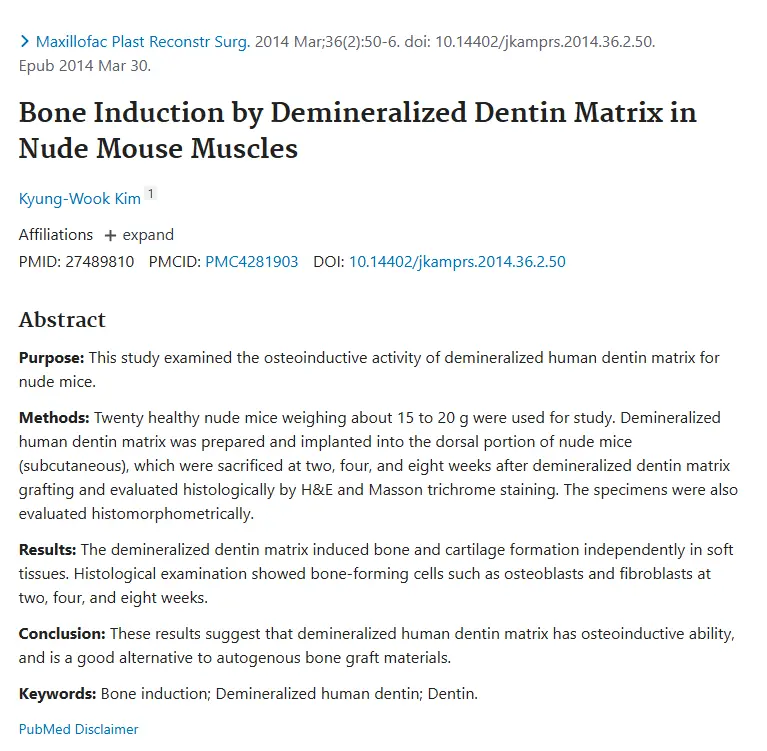
Animal experiments further validated its clinical translational potential. In bone induction-related studies, similar bioactive molecules, when implanted into animals via carriers, significantly promoted osteoblast and fibroblast infiltration, accelerating new bone formation. By analogy, dentonin, with its adhesion-promoting properties, holds promise for shortening treatment cycles and improving the quality of new bone in scenarios such as dental implant bone augmentation and bone defect repair, offering a better solution for complex cases such as severe bone resorption.
As a MEPE family-derived peptide, dentonin's mechanism of action is deeply related to bone metabolism regulation. MEPEs themselves are key glycoproteins regulating bone mass and influencing osteoblast activity, and dentonin inherits its core functional domain, participating in phosphate homeostasis regulation. This characteristic gives it unique value in research on bone metabolism disorders.
From laboratory research to clinical application exploration, high-purity bioactive short peptides like Dentonin (with a purity of up to 98.63%) are breaking through the limitations of traditional bone repair materials due to their advantages of high biocompatibility, strong targeting, and excellent safety. With continued research, it is believed that this small molecule peptide will open up broader application possibilities in the field of bone health, bringing new breakthroughs to bone defect repair and osteoporosis treatment.