




Keyword:Retatrutide,2381089-83-2
Retatrutide is an investigational triple hormone receptor agonist that has generated significant attention in the field of obesity and metabolic disease treatment. Developed to simultaneously target GLP-1, GIP, and glucagon receptors, this next-generation peptide therapy has shown remarkable efficacy in weight loss and metabolic improvement. However, as with any emerging drug, one of the most important questions is: how safe is retatrutide?
Current evidence from Phase 2 and Phase 3 clinical trials suggests that retatrutide has a generally favorable safety profile, but it is still under investigation and has not yet received full regulatory approval. Most safety data come from controlled clinical studies, and long-term effects are still being evaluated.
Overall Safety Profile in Clinical Trials
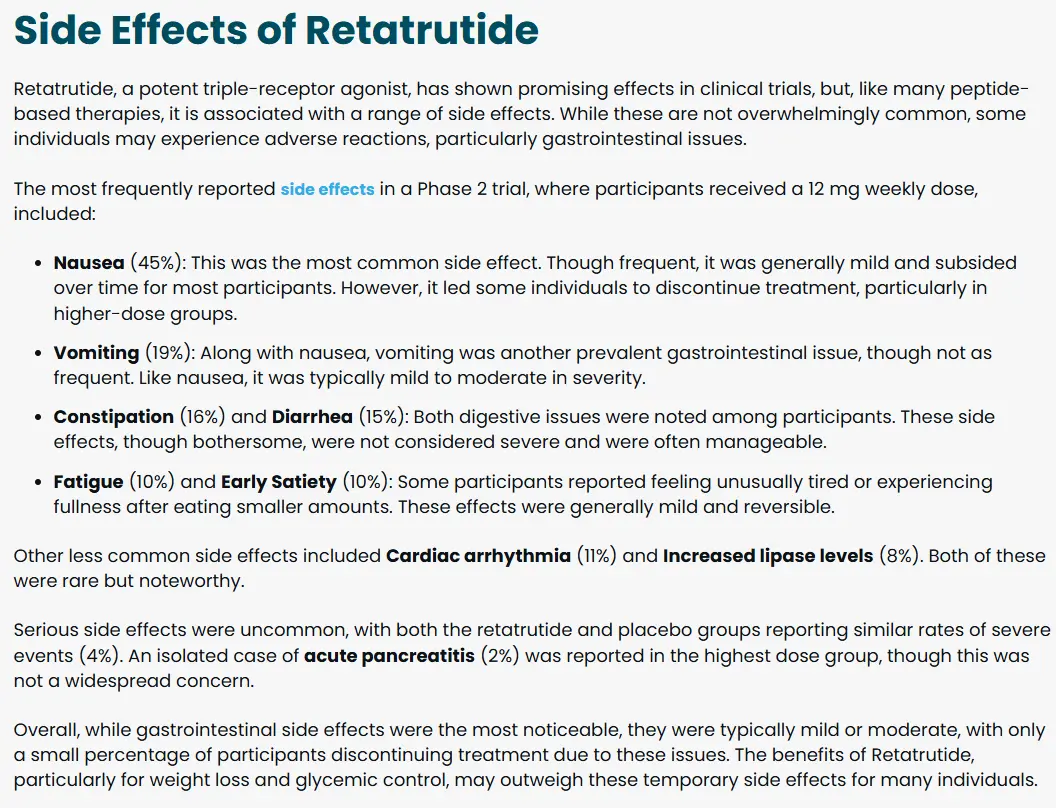
Clinical trials to date indicate that retatrutide is generally well tolerated, with most adverse events classified as mild to moderate. In large studies involving over 1,000 participants, the most commonly reported side effects were gastrointestinal in nature.
Importantly, serious adverse events appear to be relatively uncommon. In Phase 2 trials, the rate of serious side effects was similar between retatrutide and placebo groups (around 4%), suggesting no major safety signal at this stage.
However, because retatrutide is still in late-stage clinical trials, its long-term safety profile remains unknown, and further studies are required before widespread clinical use.
Common Side Effects: Gastrointestinal Reactions
The most frequently reported side effects of retatrutide are gastrointestinal symptoms, similar to those seen with other incretin-based therapies.
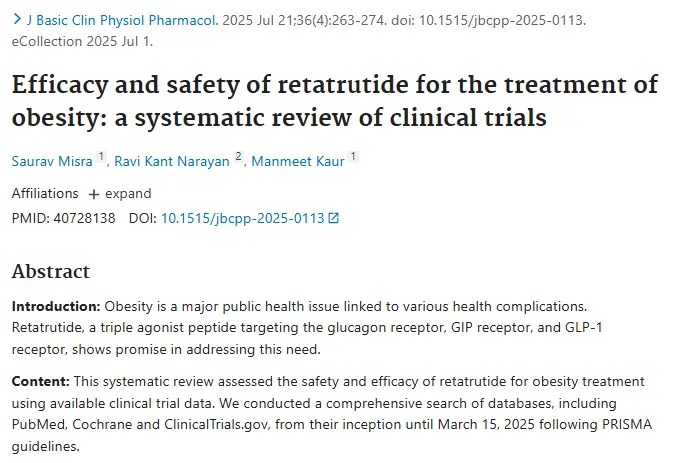
These include nausea, vomiting, diarrhea, constipation, and abdominal discomfort. Clinical trial data show that nausea can occur in up to 40–45% of patients, while diarrhea and vomiting are also relatively common.
These side effects are typically dose-dependent and occur most often during the early stages of treatment, particularly during dose escalation. In most cases, symptoms are transient and improve over time as the body adapts to the medication.
Although generally manageable, gastrointestinal side effects are the most common reason for treatment discontinuation in clinical trials.
Dose-Dependent and Emerging Safety Signals
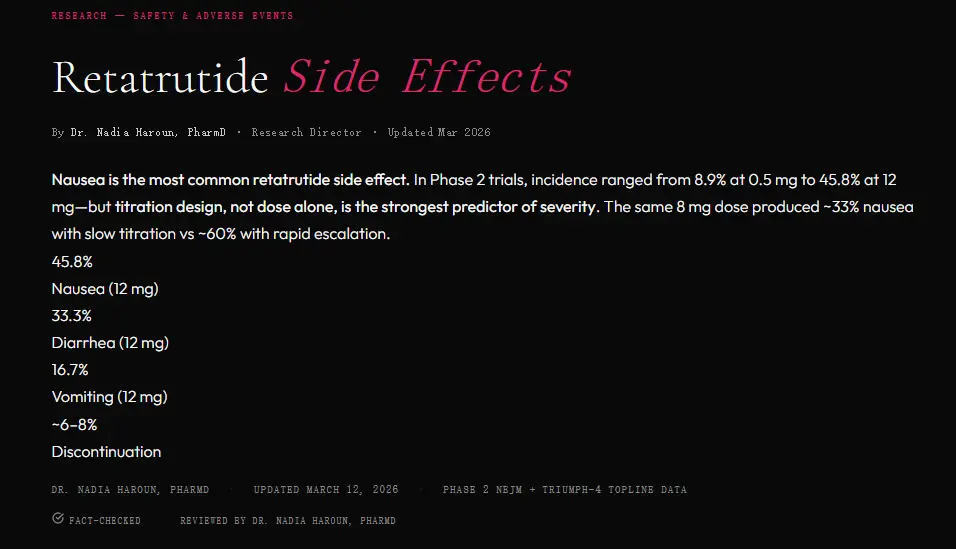
Like many metabolic drugs, the safety of retatrutide appears to be closely related to dosage. Higher doses are associated with increased frequency and severity of side effects.
One notable emerging safety signal from Phase 3 trials is dysesthesia, a condition involving abnormal skin sensations such as tingling, numbness, or burning. This effect appears to be dose-dependent, with higher incidence observed at higher doses.
Additionally, some participants in clinical trials experienced fatigue, dizziness, and decreased appetite, which are consistent with the drug’s metabolic effects.
These findings highlight the importance of careful dose titration and clinical monitoring when using retatrutide.
Rare but Serious Risks
Although uncommon, some potentially serious adverse events have been reported in clinical studies. These include isolated cases of pancreatitis, liver enzyme elevations, and cardiac-related effects such as arrhythmias.
There are also theoretical concerns related to GLP-1–based therapies, including a possible risk of thyroid C-cell tumors observed in animal studies. However, no confirmed cases have been reported in humans to date.
As with other drugs in this class, retatrutide is generally not recommended for individuals with a history of certain endocrine tumors or severe gastrointestinal disorders.
Discontinuation Rates and Tolerability
In clinical trials, approximately 5–8% of participants discontinued treatment due to side effects, compared with lower rates in placebo groups.
This suggests that while most patients tolerate the drug well, a subset may experience side effects significant enough to stop treatment. Gradual dose escalation strategies are often used to improve tolerability and reduce dropout rates.
Regulatory Status and Safety Considerations
It is important to note that retatrutide is not yet approved for general clinical use. It is currently being evaluated in Phase 3 trials under controlled conditions.
Because of this, its safety profile is still evolving, and real-world safety data are not yet available. Experts emphasize that retatrutide should only be used within clinical trials or under strict medical supervision.
Additionally, concerns have been raised about unregulated or counterfeit versions of the drug being sold online, which may pose significant health risks due to lack of quality control.
Benefit–Risk Balance

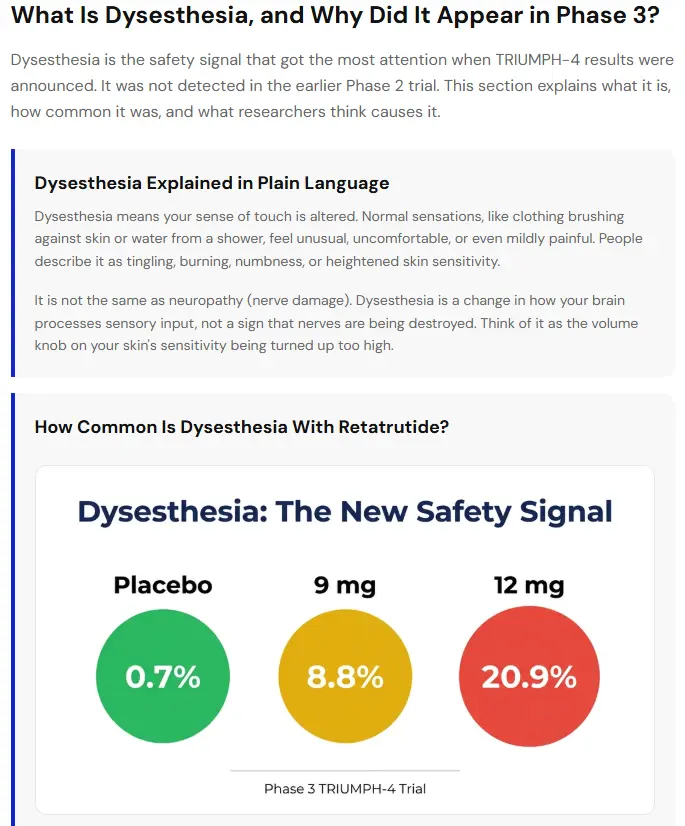
Despite safety considerations, retatrutide has demonstrated remarkable efficacy, including substantial weight loss and improvements in metabolic markers. In some studies, patients achieved weight reductions approaching 25–30%, which is comparable to bariatric surgery outcomes.
For many patients with severe obesity or metabolic disease, these benefits may outweigh the risks—especially when treatment is carefully monitored. However, the long-term safety and optimal patient population remain areas of active research.
Conclusion
Retatrutide appears to have a generally favorable short-term safety profile, with most side effects being mild to moderate and primarily gastrointestinal. Emerging data from clinical trials suggest that while the drug is effective and relatively well tolerated, there are still important considerations, including dose-dependent side effects, rare adverse events, and unknown long-term risks.
As research continues,retatrutide may become a powerful tool in the treatment of obesity and metabolic disease. However, until it is fully approved and its long-term safety is established, it should be used cautiously and only under medical supervision.